

Most people picture Texas in winter as a place to escape the cold, and most days that holds up. Then a blue norther comes through, the wind swings around to the north, and a mild afternoon turns into a hard freeze by morning. If you’re winter RV camping in Texas or just passing through on I-35, it pays to know what a Central Texas cold snap looks like and what to do with your rig when one is on the way.
This guide covers how cold it actually gets around Waco, a simple plan for a one-night freeze, how to handle a longer stretch of hard cold, and when it makes more sense to sit tight than to drive.
Key takeaways
- Waco’s average first freeze is in late November and its average last freeze is in mid-March, so plan on at least a few freezing nights on any winter trip through Central Texas.
- For a single night near or just below freezing, unhooking and draining your hose, running off your fresh tank and keeping the furnace on handles most of the risk.
- Longer or harder freezes are about the parts outside the heated coach: the water bay, dump valves, the water heater and your batteries.
- Bridges and overpasses ice first. If freezing rain is in the forecast for your travel day, staying put an extra night is usually the smart call.
How cold does it get in Central Texas in winter?
Mild most of the time, with short, sharp cold spells. The National Weather Service’s 1991 to 2020 normals put Waco’s average January low at about 36 degrees, with highs near 59. December and February run a few degrees warmer.
Averages hide the swings, though. A typical winter week here might be shirt-sleeve weather on Tuesday and a hard freeze on Thursday night. Fronts tend to arrive with strong north wind, so the cold comes with a wind chill that makes outdoor chores like unhooking a hose a lot less fun after dark.
The freeze season is longer than many travelers expect. The NWS lists Waco’s average first freeze as November 21 and the average last freeze as March 11. That window covers most of snowbird season and the holiday travel weeks.
Your plan for a one-night freeze
A single night that dips to around freezing is the most common situation on a Texas winter trip, and it’s easy to manage. The goal is to keep water out of anything exposed and keep the inside of the rig warm.
- Fill your fresh tank before dark. Then disconnect the water hose, drain it and coil it up. A hose left hooked up can freeze solid overnight, and so can the spigot connection.
- Switch to your water pump. As long as the coach stays heated, water lines inside it are usually fine.
- Keep the furnace running. Good Sam’s cold-weather advice is to keep the furnace on and let it cycle through the night. A space heater can help in the living area, but the furnace is what pushes warm air into the spaces where many rigs run their plumbing.
- Open the cabinets under the sinks. That lets warm air reach the pipes behind them.
- Check your propane before the front arrives. The furnace burns more propane than anything else in your RV, and a cold night is a bad time to find out a tank is low.
If you’re staying with us and aren’t sure what a night’s forecast means for your setup, ask the office. And since we fill propane right here at the park, you can top off your tanks the afternoon you arrive instead of hunting for a station after you’ve already set up.
When it gets colder or stays below freezing
A hard freeze, or several freezing nights in a row, is a different job. The heated coach is rarely the problem. The trouble spots are the pieces that sit outside the warm space.
The water bay and exposed lines
Many rigs have a fill or utility compartment that isn’t well insulated. Winnebago’s guide to winter RVing describes lines in that bay freezing even while the coach was heated, and recommends a heated fresh water hose or relying on your fresh tank. Some owners keep a small heat lamp in the bay on the coldest nights. If you do that, keep it well away from anything that can melt or burn.
Holding tanks and dump valves
Tank heaters help, but they don’t always protect the short outlet pipe and valves below the tanks. On a multi-night cold stretch, keep your dump valves closed, dump when the tanks are reasonably full rather than letting them trickle, and avoid running the black tank nearly empty. Good Sam also suggests adding some RV antifreeze to unheated tanks when you’ll be camping in sustained cold.
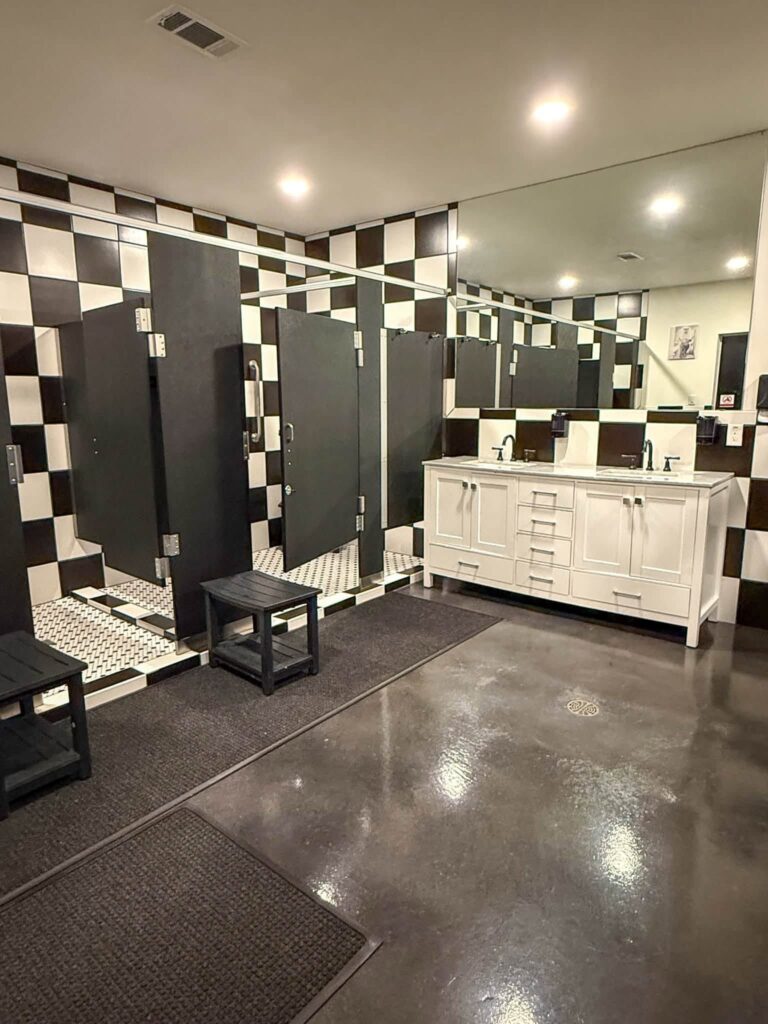
Using the park’s bathhouse is another easy way to slow how fast your gray tank fills. We have tiled private shower rooms, which beat a quick, lukewarm shower in a cold coach on a freezing morning.
The water heater
If you’ll be driving in below-freezing weather with the water heater off, or leaving the rig unheated, drain it. A full tank sitting cold in an outside compartment is one of the more expensive things to crack.
Batteries
Your furnace fan runs on 12-volt power. If you’re off shore power, it can pull your house batteries down overnight, and a battery that isn’t fully charged is more likely to struggle in the cold. On a cold night, a site with shore power is worth a lot more than it is in April. If hookups are new to you, our beginner’s guide to hookups and setup walks through the basics.
Cold-weather checklist for a Texas RV trip
Here’s a quick way to size up the forecast and decide how much to do.
| Forecast low | What we’d do |
|---|---|
| Upper 30s | Nothing special. Keep the furnace set to come on overnight. |
| Around 32 | Fill the fresh tank, unhook and drain the hose, open sink cabinets, check propane. |
| Mid to low 20s | All of the above, plus protect the water bay, check that tank heaters are on and keep dump valves closed. |
| Several days below freezing, or temps in the teens | Plan to stay put. Think about draining the water heater if you’ll be driving, keep batteries charged and keep a close eye on propane. |
These are rules of thumb, not guarantees. Every rig is built differently, so check your owner’s manual for where your lines run and what your tank heaters actually cover.
Should you drive during a Texas cold snap?
Cold by itself isn’t a reason to park. Ice is. When freezing rain or sleet hits Central Texas, it doesn’t take much to make the roads dangerous, especially for a tall, heavy rig.
TxDOT’s snow and ice driving guidance is blunt: avoid the roads in winter weather if you can. If you have to drive, slow down well below the posted limit, leave at least three times your usual following distance, and take extra care on bridges, ramps and overpasses, which ice over first. The same page points you to DriveTexas for current closures and conditions.
On I-35 through Waco, that bridge warning matters. The highway crosses the Brazos River and a long string of overpasses and ramps, and the construction zones add lane shifts on top of it. Our guide to the snowbird drive south on I-35 covers the road work in more detail.
If you’re crossing the state east to west, keep in mind that I-20 between Dallas and Abilene tends to see more ice than I-10 does. We compared both in our article on driving across Texas in an RV.
Our advice: if the forecast shows freezing rain on your travel day, book the extra night. One day of delay costs far less than a slide off an icy overpass.
Why a covered site helps in winter
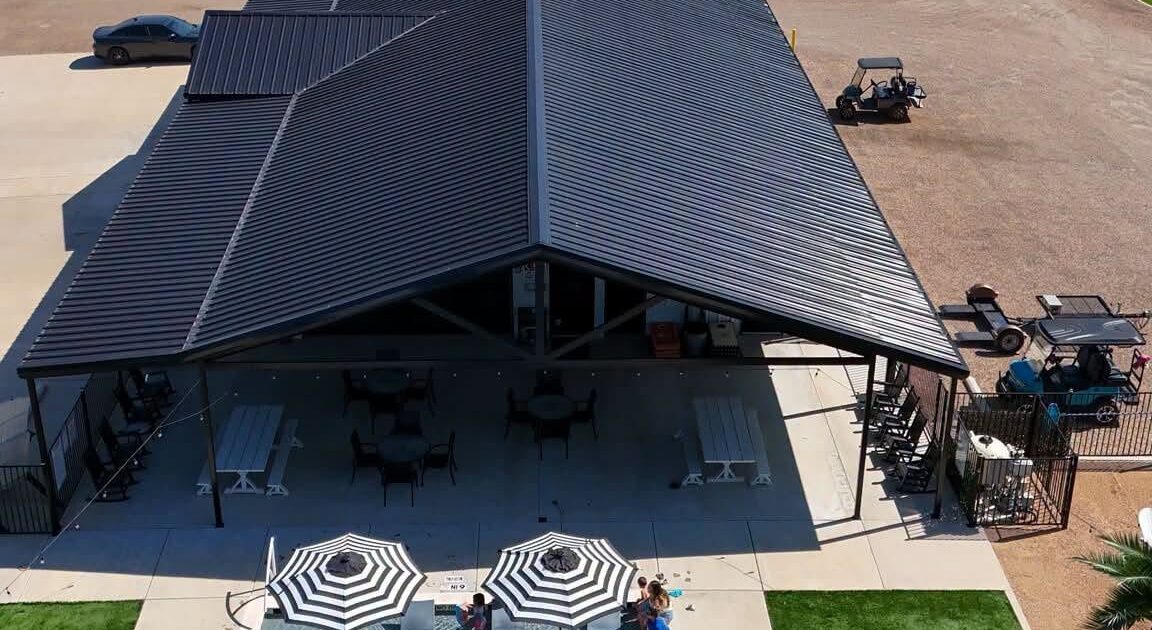
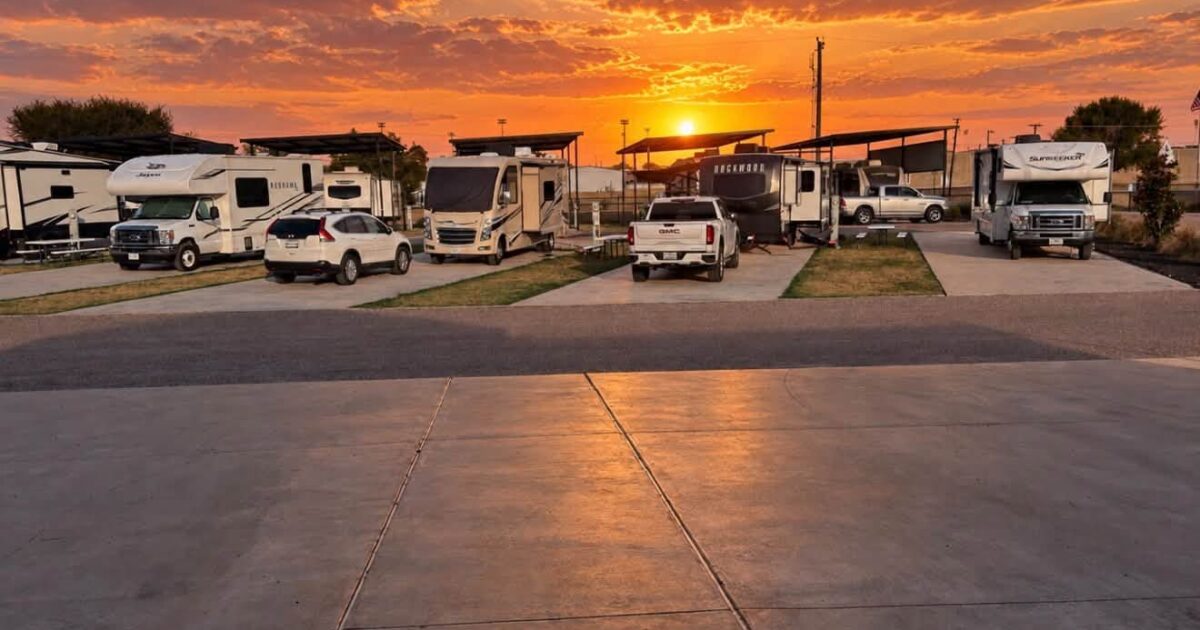
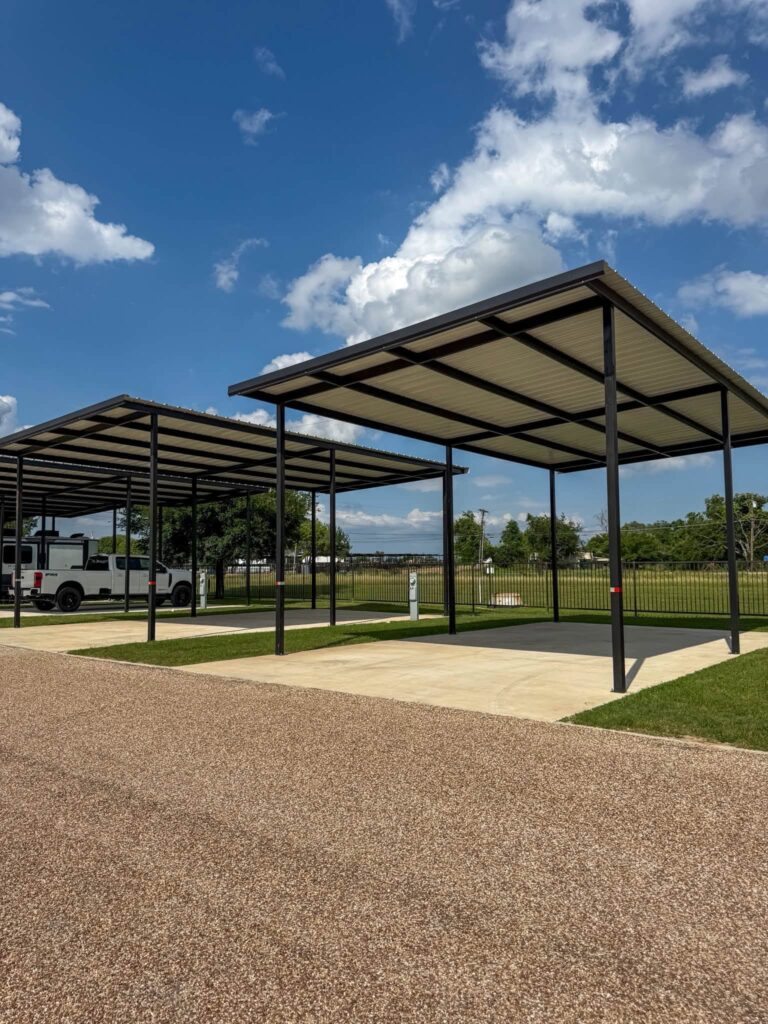
Winter fronts in Central Texas don’t always bring ice. Sometimes they bring a line of storms first, with heavy rain and occasionally hail, and then the cold behind it. More than 100 of our 255 sites are covered, which gives your roof, awnings and slide toppers some protection when storms roll through ahead of a front. It also helps keep frost off the windshield, which is a small thing until you’re trying to leave early on a freezing morning.
If a cold spell has you thinking about slowing down for a while instead of pushing on, we offer nightly, weekly and monthly RV stays. Plenty of winter travelers find a week in one place easier on the rig and on them than packing up every morning in the cold.
Frequently asked questions
Do I need to winterize my RV to camp in Texas in winter?
Usually not, if you’re using the RV. Full winterizing is for storage. If you’re camping with the furnace on, a few freeze-night habits (unhooking the hose, running off your fresh tank, protecting exposed lines) cover most Central Texas cold snaps.
At what temperature should I disconnect my RV water hose?
Many RVers unhook any night the forecast low is at or near 32 degrees, especially with wind. A heated hose lets you stay connected through colder nights, but the spigot and connection still need protection.
When does it freeze in Waco?
According to the National Weather Service, Waco’s average first freeze is November 21 and its average last freeze is March 11. Freezes earlier or later than that do happen.
Is it safe to drive an RV on I-35 during an ice storm?
TxDOT advises staying off the roads during winter weather if you can. Bridges and overpasses ice first, and I-35 has a lot of them. Waiting a day is usually the better choice.
Can I get propane in Waco during a cold snap?
Yes. We fill propane at the park for motorhomes, camping and tanks. Fill up when you arrive rather than waiting for the cold to hit.
Stop with us before the next front
If a cold front is headed for your route through Central Texas, we’d be glad to give you a warm place to wait it out. Tell us your rig length, how many pets are with you and when you expect to pull in, and we’ll help you find a site that fits.
Call 254-799-3105 or send us a message. Stay warm out there.